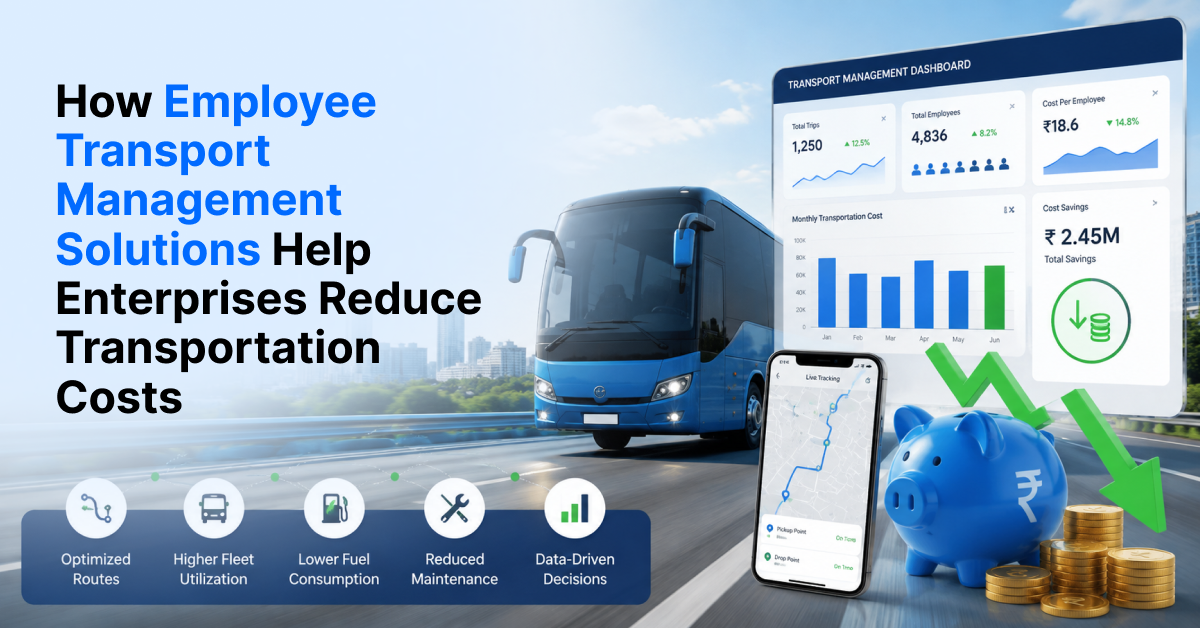
Every enterprise with a mobile workforce knows this pain point well. Fuel prices swing without warning. Fleet bills arrive when least expected. Drivers sit idle during slow hours, and yet payroll stays fixed. Admin teams spend hours untangling routes on spreadsheets. None of this shows up as one big expense. It shows up as dozens of small leaks across the system.
That is exactly why more enterprises are turning to an employee transport management solution. It brings visibility to costs that once stayed hidden. It shows exactly where the transportation budgets go each month. This blog walks through the real cost drivers behind corporate transportation. It also looks at how the right employee transport management solution fixes each one. You will find practical examples and a checklist you can use. Let’s dive in.
Why Transportation Costs Are Rising For Enterprises
Enterprise transportation budgets face pressure from several directions. Understanding these cost drivers helps companies address them properly.
- Fuel and Fleet Expenses
Fuel costs remain a major concern for many enterprises. Vehicle maintenance is a recurring and often unpredictable expense. Older fleet methods rarely track these costs closely. This lack of visibility leads to budget overruns.
- Inefficient Manual Route Planning
Manual route planning often results in longer trips. Vehicles cover more distance than necessary. Idle time between trips wastes fuel and driver hours. These inefficiencies add up significantly over a year.
- Overstaffing and Idle Vehicle Time
Many companies overstaff drivers to cover unpredictable demand. Vehicles often sit idle during low-demand hours. This mismatch between supply and need increases costs. Better planning tools can correct this imbalance.
How Employee Transport Management Solutions Cut Costs
Employee transport management solutions address these cost drivers directly. They replace guesswork with structured, data-backed processes.
- Route and Schedule Optimization
Route optimization reduces unnecessary travel distance. Trips get planned around actual employee locations. Schedules adjust automatically based on shift patterns. This lowers fuel use and vehicle wear over time.
- Data-Driven Fleet Utilization
Fleet utilization data shows which vehicles run efficiently through fleet management software. Managers spot underused vehicles quickly. They can then reassign or reduce fleet size. This approach prevents unnecessary fleet expansion.
- Reduced Dependency on Manual Staff
Automation reduces the need for large coordination teams. Fewer staff are needed for daily scheduling work. This lowers administrative overhead significantly.
Several cost drivers get addressed through this shift.
- Reduced fuel use through optimized routing
- Lower administrative costs through automation
- Fewer idle vehicles through better fleet planning
- Reduced overtime costs through accurate scheduling
- Lower incident costs through improved safety tools
Key Cost-Saving Features of an Employee Transport Management System
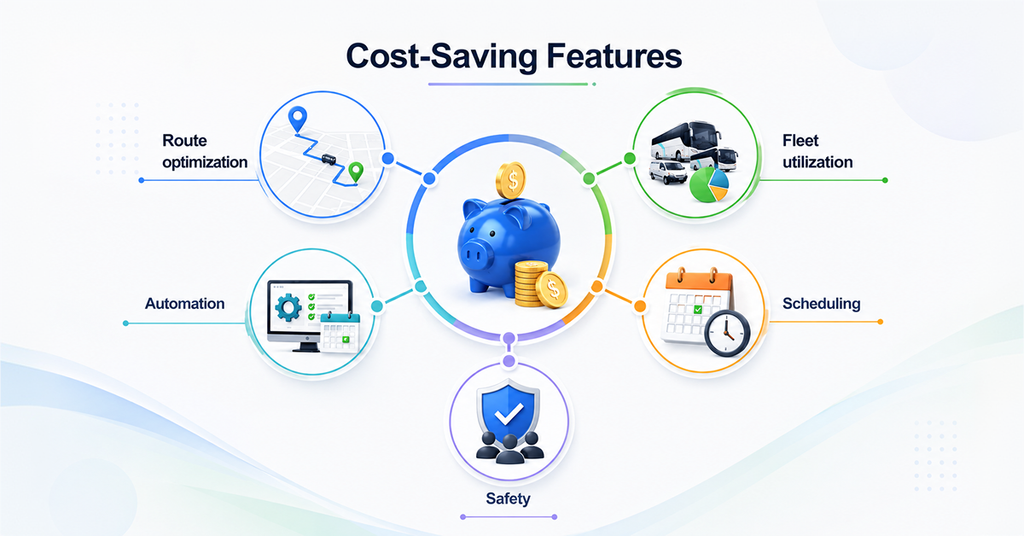
An employee transport management system includes features built for cost control. Each feature plays a specific role in reducing expenses.
- Real-Time Tracking and Route Management
Real-time tracking shows exact vehicle locations at all times. Managers adjust routes instantly to avoid delays. This prevents wasted fuel from poor routing decisions.
- Admin Dashboard and Reporting
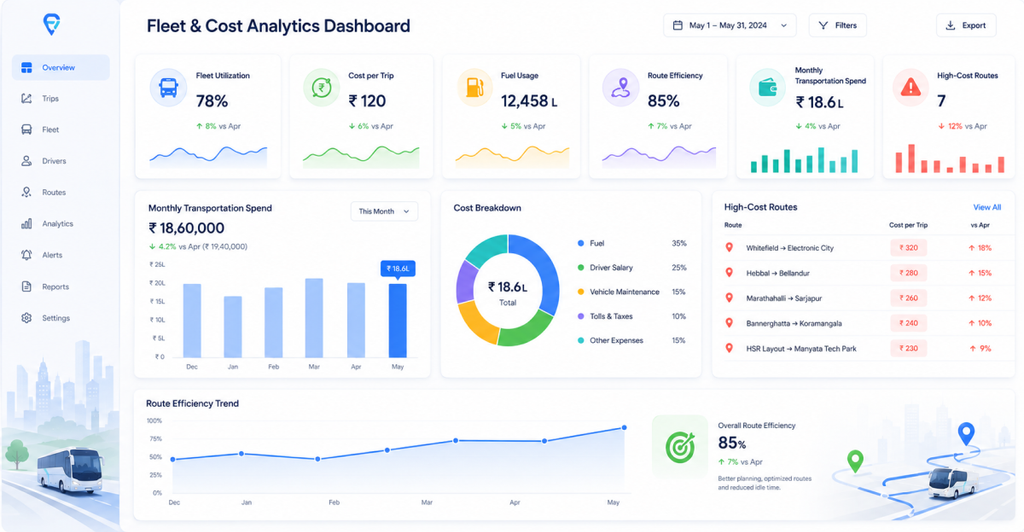
The admin dashboard centralizes all transportation data. Reports highlight cost trends across routes and vehicles. Managers use this data to plan budgets accurately.
- Customized Billing Module
The billing module supports multiple pricing models. Companies can bill by trip, route, package, or distance. This flexibility helps match costs to actual usage.
- Fleet and Trip Monitoring
Fleet monitoring tracks vehicle usage across every trip. It flags underused or overused vehicles quickly. This visibility supports smarter fleet size decisions.
Key features that directly support cost control include the following.
- Real-time tracking for accurate route adjustments
- Customized billing for flexible cost management
- Fleet monitoring for better vehicle utilization
- Automated reporting for clear budget visibility
- Emergency response tools that reduce incident costs
- Operational Efficiency Translating Into Savings
Operational efficiency directly reduces overall transportation spend. An employee transport management software platform makes this connection clear.
- Centralized Command Centre
A command centre consolidates all transportation operations. Managers monitor routes, trips, and costs in one place. This reduces time spent switching between tools.
- Automated Reporting and Analytics
Automated analytics remove manual reporting effort. Managers identify high-cost routes or vehicles quickly. They can then take corrective action faster.
- Reduced Ad-Hoc and Emergency Costs
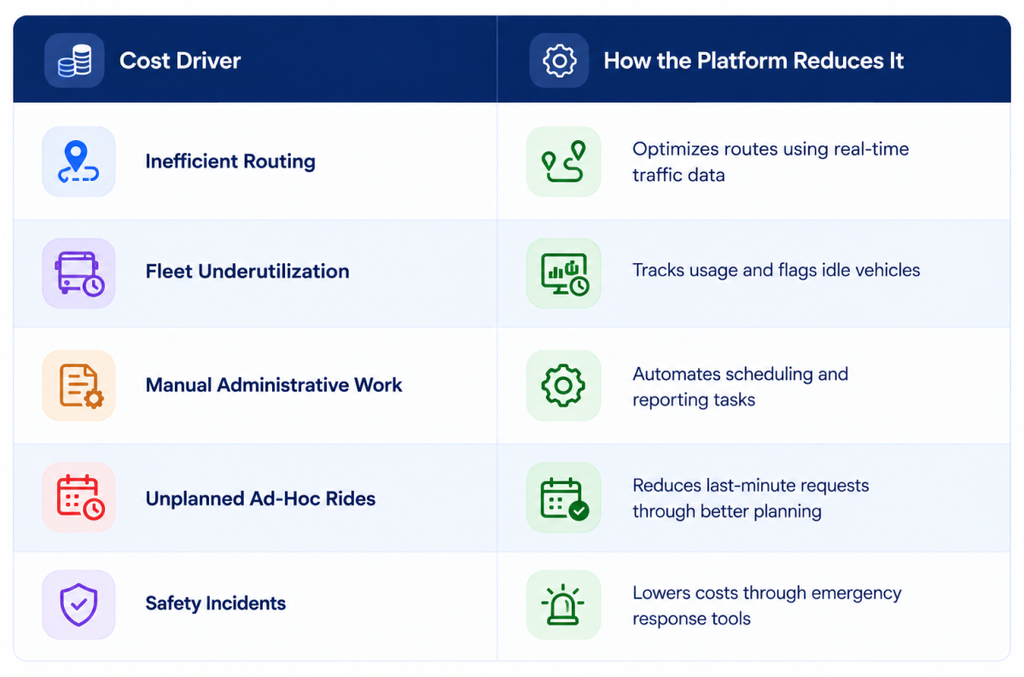
Ad-hoc ride requests often carry higher costs. Better planning reduces the need for last-minute arrangements. Emergency response tools also lower costs tied to safety incidents.
The table below connects cost drivers to how the platform addresses them.
Employee Transportation Management System Versus Traditional Costs
Comparing a software-driven system with traditional methods shows clear savings potential.
- Upfront Investment Versus Long-Term Savings
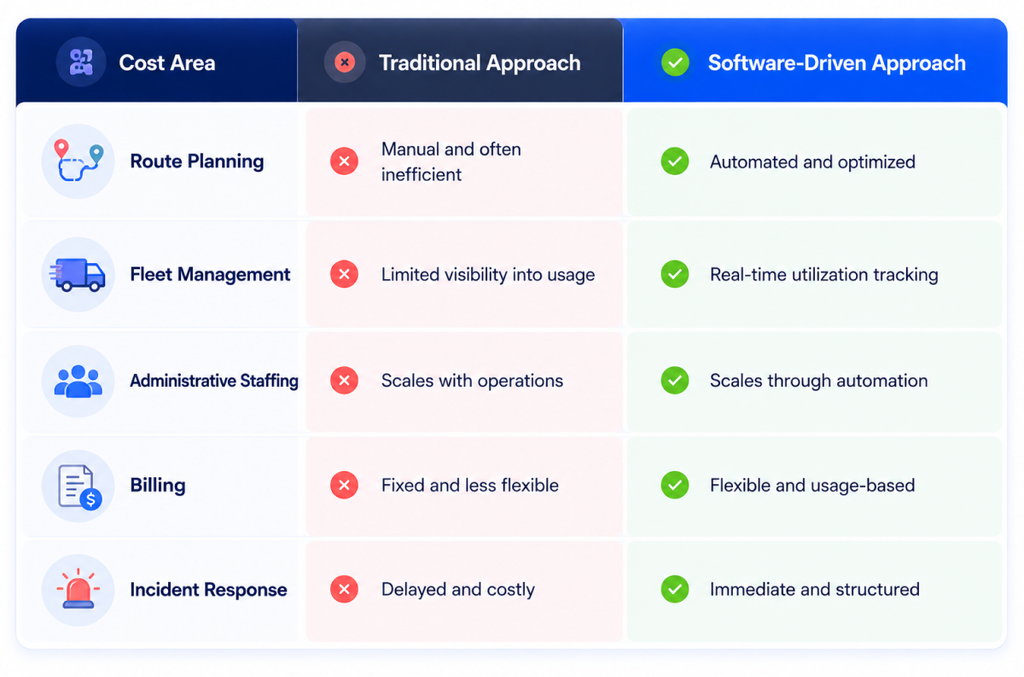
Traditional systems seem cheaper at first glance. Hidden costs build up through inefficiency over time. Software requires upfront investment but reduces costs steadily. Long-term savings often outweigh the initial expense.
- Scalability Without Proportional Cost Increase
Traditional methods need more staff as operations grow. Costs increase in direct proportion to headcount. An employee transportation management system scales through automation instead. Growth does not require the same cost increase.
The table below outlines traditional cost areas against software-driven alternatives.
Real-World Examples of Cost Efficiency Through Transportation Solutions
Real examples show how employee transportation solutions deliver measurable savings.
- Airport and Airline Crew Logistics
A large airport and airline in Southeast Asia faced high coordination costs. Manual scheduling led to inefficient crew transport. A structured platform introduced route optimization and live tracking. This reduced wasted trips and lowered coordination costs.
- Educational Institute Transportation
An educational institute managed transport across multiple campuses. Manual planning led to overlapping and inefficient routes. A dedicated platform introduced route planning and fleet monitoring. This improved efficiency and reduced overall transportation spend.
Checklist To Evaluate Cost Efficiency Before Choosing a Solution
Use this checklist to compare platforms on cost efficiency.
- Confirm the platform offers flexible, usage-based billing models
- Check for real-time fleet and trip monitoring tools
- Verify automated reporting covers cost and usage trends
- Ensure route optimization uses live traffic data
- Look for scalability without major added administrative cost
- Ask about total cost of ownership over multiple years
- Confirm integration with existing finance or billing systems
- Review vendor support and implementation costs upfront
- Check for audit-ready logs to support cost tracking
- Ask for references showing measurable cost savings
Future Trends In Cost-Efficient Employee Transportation
Cost efficiency in transportation keeps evolving with new technology.
- AI-Driven Cost Prediction
Artificial intelligence increasingly predicts transportation costs in advance. It analyzes historical data across routes and fleets. This helps companies plan budgets more accurately.
- Shared Mobility and Route Consolidation
Shared mobility options reduce per-employee transportation costs. Route consolidation lowers fuel use across the fleet. This trend will shape future employee transport management solution choices.
Conclusion
An employee transport management solution gives enterprises real control over transportation costs. It replaces manual processes and scattered spreadsheets with structured systems. Companies gain visibility into the overall transportation cost. This visibility leads to steady and measurable savings across departments and locations. It also improves the daily commute experience for employees.
Better commutes support retention and reduce scheduling complaints over time. Fewer complaints mean HR teams can focus on other priorities. Reviewing the checklist above is a practical first step for most enterprises. It helps decision makers compare options clearly and confidently. Every enterprise has different routes, shifts, and staffing patterns to consider. The right employee transportation solution should fit both current needs and future growth. It should also scale smoothly as the workforce expands over time. Choosing wisely now saves time, money, and effort down the line. Small improvements today often lead to significant savings tomorrow.